Source Power Steering Oil Seal for Engine, Transmission, and Axle
Find and compare 27 power steering oil seal options for engine, transmission, and rear axle applications. These NBR components offer low to high-speed sealing performance with customizable sizes and OEM services for industrial and vehicle use.
Key considerations
Products List


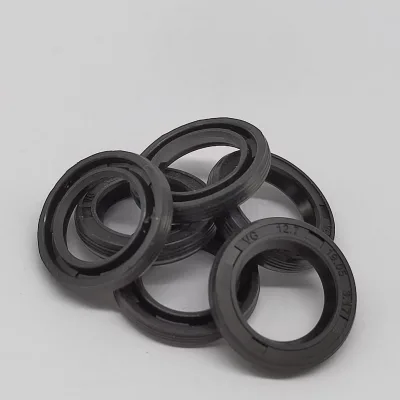
Comprehensive Sourcing Guide
Power Steering Oil Seal Sourcing Guide
Procuring power steering oil seals requires a disciplined approach to ensure hydraulic integrity and long-term system reliability. These critical components prevent fluid leakage while maintaining the precise pressure needed for smooth steering operation in vehicles and industrial machinery. Buyers must navigate a market where specifications vary significantly based on the application, from passenger cars to heavy-duty transmission systems. The complexity of sourcing these parts lies in matching the exact dimensional tolerances and material properties to the specific demands of the power steering unit.
This guide outlines the essential verification steps for sourcing high-performance oil seals, focusing on the observed market data and technical requirements. It addresses the range of available customization options, material compositions like NBR, and the diverse application scenarios including engines, transmissions, and rear axles. By adhering to the structured verification process detailed below, procurement teams can mitigate the risks of premature failure and ensure that the selected components meet the rigorous standards of modern automotive and industrial engineering.
Product Scope and Observed Listing Signals
The market for power steering oil seals presents a wide spectrum of product configurations, ranging from standard off-the-shelf components to fully customized assemblies. Listings indicate that suppliers offer products with specific dimensions such as 25379 mm and 22388.5 mm, alongside fully customized sizing options to meet unique engineering requirements. The observed product types include assembled units and specific seal designs like the Haplotype, with cross-section shapes predominantly identified as O-Rings. This variety suggests that buyers must clearly define whether they require a standard replacement part or a bespoke solution tailored to a specific housing geometry.
Material composition and physical attributes are equally critical when evaluating product listings. The available inventory frequently features Nitrile Butadiene Rubber (NBR) as the primary material, chosen for its resistance to oil and hydraulic fluids, with colors typically appearing in black or brown. Performance characteristics observed in the market include capabilities for both low and high-speed applications, as well as seals designed to withstand high-pressure environments. Buyers should verify that the listed "Factory Direct Sale" advantage does not compromise the quality of the sealing effect, which is described as essential for fixture and sealing functions in engines, transmissions, and rear axles.
Technical Specifications to Verify
Dimensional accuracy is the primary technical hurdle in sourcing power steering oil seals, as even minor deviations can lead to catastrophic fluid leakage. Buyers must rigorously verify the internal diameter, outer diameter, and width against the specific model numbers provided, such as ACOS-114, APSOS-18, or COS-37. The market data shows a mix of standard parts and fully customized sizes, meaning that relying on generic descriptions is insufficient. Procurement teams should demand precise 2D or 3D drawings from the supplier to confirm that the seal's geometry matches the original equipment manufacturer (OEM) specifications or the specific design of the power steering assembly.
Beyond dimensions, the operational parameters of the seal must align with the dynamic conditions of the power steering system. The observed listings highlight seals rated for both low and high speeds, indicating that the selection must be based on the rotational velocity of the shaft the seal will protect. Additionally, the pressure rating is a vital specification, with some products explicitly marketed for high-pressure performance. Buyers should confirm that the selected seal's material, typically NBR, is compatible with the specific hydraulic fluid used in the system and that the "Pressure Type" designation matches the system's maximum operating pressure to prevent extrusion or deformation.
Compliance and Safety Documentation
While specific certification names may vary by supplier, the presence of ISO standards is a key indicator of a manufacturer's commitment to quality management. The observed data mentions "ISOStandard Component," suggesting that compliant suppliers adhere to international quality benchmarks for their production processes. Buyers should request evidence of these certifications to ensure that the manufacturing environment maintains the consistency required for critical safety components like oil seals. In the automotive sector, compliance with industry-specific standards is often mandatory to ensure that the seals do not fail under the stress of vehicle operation, which could lead to loss of steering control.
Documentation regarding the origin and production standards is equally important for supply chain transparency and liability management. The majority of observed listings originate from China, and buyers should verify that the "Standard" or "Customized" nature of the product aligns with the regulatory requirements of the destination market. For applications in vehicles and industrial machinery, the supplier should provide documentation confirming that the materials used are free from prohibited substances and meet environmental regulations. Ensuring that the "Accpet Customers' Designs" capability is backed by a robust quality assurance protocol is essential for maintaining safety compliance throughout the product lifecycle.
Cost Drivers and Commercial Terms
The pricing structure for power steering oil seals is influenced by the level of customization and the complexity of the manufacturing process. Listings show a broad price range, reflecting the difference between standard, mass-produced items and bespoke solutions requiring specific tooling or design work. The "Factory Direct Sale" attribute suggests that buyers may achieve better margins by sourcing directly from manufacturers, but this must be balanced against the potential for higher minimum order quantities (MOQs). Buyers should analyze the cost implications of ordering in bulk versus smaller batches, as the observed MOQ range spans from 1 to 500 units, offering flexibility for different procurement strategies.
Commercial terms regarding packaging and logistics play a significant role in the total cost of ownership. The market offers various packaging options, including carton packaging, pallets, and plastic bags, which can affect shipping costs and the risk of damage during transit. Buyers should negotiate terms that align with their inventory management capabilities, considering that some suppliers offer "Carton or as Your Required" flexibility. Additionally, the availability of OEM or ODM services can impact the final price, as custom design work often incurs additional tooling or engineering fees. Understanding these variables is crucial for developing a total cost model that accounts for both the unit price and the logistical overhead.
Supplier Qualification and Quality Control
Evaluating a supplier's technical capabilities is essential for ensuring consistent product quality in power steering oil seals. The observed data indicates that manufacturers utilize specific techniques such as "Press" manufacturing, which requires precise control to maintain dimensional integrity. Buyers should assess the supplier's ability to handle "2D or 3D Acceptable" drawings, as this demonstrates their capacity to interpret complex engineering requirements and produce seals that fit precisely. A qualified supplier must also demonstrate experience in producing seals for diverse applications, including auto parts, household appliances, and electronic products, proving their versatility and technical depth.
Quality control processes must be robust enough to handle the high-performance demands of power steering systems. Suppliers offering "Customized" standards and "according customer" specifications should have a documented process for validating these custom designs before mass production. Buyers should verify that the supplier conducts rigorous testing to ensure the seals meet the required performance metrics, such as high-pressure resistance and speed tolerance. The presence of "Standard Component" classifications alongside custom options suggests that the supplier has a baseline quality system that can be scaled for specialized orders, ensuring that every unit, whether standard or bespoke, meets the necessary reliability standards.
Long-Term Procurement Checks
Sustaining a reliable supply chain for power steering oil seals requires ongoing monitoring of supplier performance and product consistency. Buyers should establish a schedule for periodic audits to verify that the supplier continues to adhere to the agreed-upon standards and maintains the quality of their NBR materials over time. Given the critical nature of these components in vehicle and industrial applications, any deviation in the sealing effect or dimensional accuracy can lead to significant operational disruptions. Regular quality checks help identify potential issues early, allowing for corrective actions before defective parts reach the assembly line.
Strategic planning for long-term procurement involves maintaining a relationship with suppliers who can adapt to evolving design requirements and market demands. The ability of suppliers to accept "Customers' Designs" and provide "OEM or ODM" services is a valuable asset for buyers looking to innovate or modify their power steering systems. Buyers should also monitor the supply chain for stability, ensuring that lead times and production capacities remain consistent even as order volumes fluctuate. By fostering a collaborative partnership with qualified manufacturers, buyers can secure a steady supply of high-performance oil seals that support the longevity and efficiency of their machinery and vehicles.
FAQs
What material is used for power steering oil seals?
The seals are manufactured from NBR (Nitrile Butadiene Rubber). This material provides excellent resistance to oils and fuels, ensuring durability in automotive applications. The black or brown color indicates the standard compound used for effective sealing in transmission and engine environments.
Can these oil seals be customized for specific engines?
Yes, customization is available for various engine and transmission requirements. Manufacturers accept customer drawings in 2D or 3D formats to produce tailored solutions. This service supports OEM and ODM needs, allowing for precise fitment in vehicle, household appliance, and industrial machinery components.
What are the standard specifications for these oil seals?
Standard specifications include dimensions such as 25*37*9, 22*38*8.5, and 32*44.5*8.5 mm. The cross-section shape is typically O-Ring or Haplotype. These standard parts are designed for fixture and sealing effects, meeting general industry standards for low to high-speed pressure applications.
How are the oil seals packaged for shipment?
Packaging options include carton packaging, plastic bags with cartons, or pallets. Suppliers offer flexible packing solutions, such as carton or custom requirements, to protect the seals during transit. This ensures the products remain clean and undamaged when delivered to industrial or automotive buyers.
What certifications do the oil seal manufacturers hold?
Manufacturers hold ISO standard certifications for their components. This indicates adherence to quality management systems for producing standard and customized parts. The certification ensures consistent quality for oil seals used in auto parts, electronic products, and general machinery applications across global markets.
What is the typical MOQ for these oil seals?
The minimum order quantity ranges from 1 to 500 pieces. This flexibility allows buyers to test samples or order larger batches for industrial components. The low MOQ supports both small-scale repairs and large-scale manufacturing needs for vehicle and household appliance parts.